Klimabonus in Luxembourg: who qualifies, how much and how to apply
32 days left

Skimming?
We've prepared the shortcut for you.
Work it out for your project
Your Klimabonus aid, as a rough figure
Which works?
Which insulation material?
Which performance level?
Agreement in principle requested before 30 June 2027?
150 m² × €70 per m².
The aid cannot exceed 60% of the costs excluding VAT: you get it in full if the invoice reaches €17,500.
trigger estimate based on the Klimabonus 2026 rates, for a building more than 10 years old. Excludes the energy-class bonus and special cases (interior insulation, other insulation material). The actual amount is set by the agreement in principle, to be requested before the works.
Who is entitled to the Klimabonus
The aid goes to whoever owns the home or the installations. The law defines the applicant by ownership, not by where they live: it is the building that must be located in Luxembourg and used for housing.
- Owner of a house or a flat: yes.
- Co-owned building: yes. The managing agent (syndic), or an authorised person, files the application after a decision by the general meeting of co-owners.
- Tenant: no, the application is up to the owner.
- Future buyer: the application requires you to be the owner. If you buy a home to renovate, the agreement in principle is requested before starting the works. If the seller has already done the works, the aid can go to them, provided that you waive it in their favour.
For insulation and ventilation, the building must be more than 10 years old, counted from the building permit, on the day you request the agreement in principle. Each element (a wall, the roof) and each installation is subsidised only once.
It is the Environment Agency (Administration de l'environnement, AEV) that grants the aid.
Insulation and windows: how much per square metre
The aid equals the renovated surface area multiplied by a rate, which depends on the element, the insulation material and the performance achieved (from standard III, the minimum, to standard I, the most demanding). In brackets: the increased rate, if your application for an agreement in principle is submitted between 1 January 2026 and 30 June 2027 and the invoice is issued by 31 December 2030 at the latest.
| Renovated element | Insulation material | Standard III | Standard I |
|---|---|---|---|
| External wall, roof | Mineral | €60 (€70) | €85 (€100) |
| External wall, roof | Ecological | €90 (€105) | €115 (€140) |
| Slab or wall against a cellar, unheated attic or the ground | Mineral | €25 (€30) | €50 (€60) |
| Slab or wall against a cellar, unheated attic or the ground | Ecological | €40 (€50) | €65 (€75) |
| Windows and French windows | €70 (€80), single rate | €70 (€80), single rate |
Standard II lies between the two, and a recycled insulation material or one of another type gets less aid (from €20 per m²). A wall insulated only from the inside gets 25% less.
The cap: the aid for insulation does not exceed 60% of the costs of the works excluding VAT.
The bonus: if the building gains at least two insulation classes and reaches class C, B or A, the aid increases by 20%, 30% or 50%.
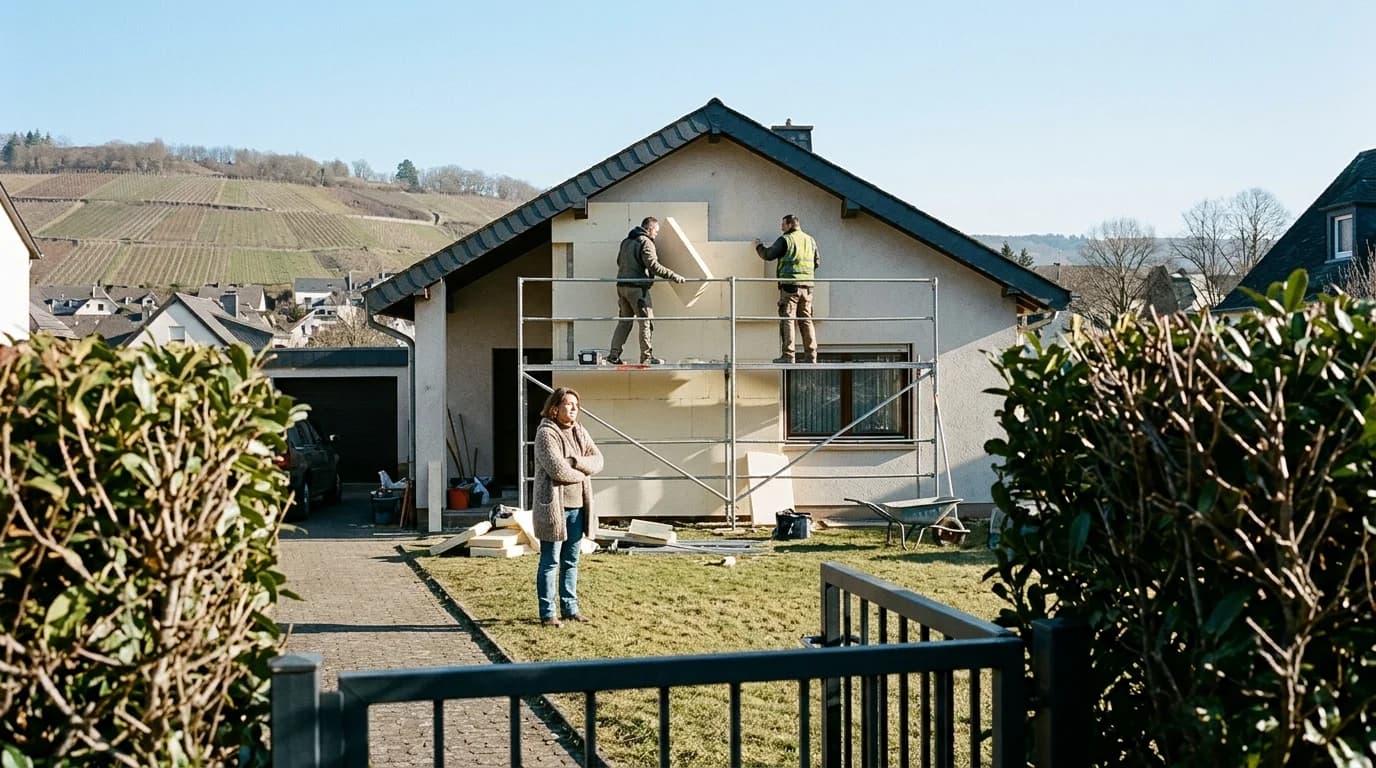
Example, trigger calculation: 150 m² of façade insulated from the outside with mineral wool, at standard III, give 150 × €60 = €9,000, or €10,500 at the increased rate, if these sums stay below 60% of the invoice excluding VAT.
Renewable heating: the amounts
The amounts below apply to a single-family house. For a heat pump in an existing home (geothermal or air-to-water), a pellet boiler or a connection, they assume that the installation replaces a fossil-fuel boiler or electric heating:
| Installation | Aid | Increased aid |
|---|---|---|
| Geothermal heat pump | €12,000 | €14,000 |
| Air-to-water heat pump, existing home | €10,000 | €12,000 |
| Air-to-water heat pump, new house | €3,000 | |
| Wood pellet boiler, existing home | €8,000 | |
| Connection to a heating network | €8,000, up to a limit of 50% of the costs excluding VAT | |
| Solar thermal, hot water and heating, building at least 10 years old | €4,000 |
The increased amount for the heat pump applies to an order placed between 1 January 2026 and 30 June 2027, with an invoice by 31 December 2028 at the latest.
- No old boiler to replace? For a house, the heat pump, the pellet boiler or the connection gives €4,000 less.
- You remove an oil tank: €1,500 more for the removal and recycling of the tank.
- Only one of these three aids per building: heat pump, wood boiler or connection to a heating network.
In a flat, the amounts are counted per home, with a cap per building: €8,000 per home for an air-to-water heat pump, €24,000 at most per building. Without a fossil-fuel boiler or electric heating to replace, the aid there is reduced by €5,000, not by €4,000.
Photovoltaics and battery: an aid that decreases with size
For panels, the aid follows a formula: power × (1,155 − 33 × power), in kilowatts-peak (kWp, the maximum power of the panels). From 15 kWp, it is a flat rate of €10,000. The installation must be at least 2 kWp and operate in self-consumption mode: you give up the guaranteed feed-in tariff, but you can sell your surplus at the market price.
A battery of at least 2 kWh gives up to €2,250 (flat rate from 9 kWh). The official simulator (opens in a new tab) calculates your case.
With pre-financing (préfinancement), an installer listed in the official register (opens in a new tab) deducts the aid from your invoice and makes the application for you, if your deposit does not exceed 30% of the price of the offer. Otherwise, you pay everything and then you apply for the aid. As for dates, keep to the most cautious rule: order by 31 December 2029 at the latest and invoice issued by 31 December 2030 at the latest. The first date comes from the amended law of 2016, the second from the law of 24 July 2026, which applies to photovoltaics from 1 January 2027.
With panels, you will sometimes produce more than you consume; without a roof to equip, you will produce nothing. In both cases, energy sharing is an option for your electricity bill. Tell us below whether you produce or only consume: our partner calls you back to see what you can gain from it.
The procedure, in order
Practical guide · trigger.lu
Klimabonus in Luxembourg: who qualifies, how much and how to apply
- Cost
- free and independent
- Phone
- (+352) 8002 11 90
- Who
- an approved energy consultant
- Aid
- €1,700 for a house, €2,000 at the increased rate
- Mandatory if
- you renovate more than one element
Details
For a single element (the roof, a wall, the windows), an approved company is enough.
- When
- before starting the insulation. The law requires the application to be submitted before the works begin; Guichet.lu also asks you to have obtained the agreement: wait for the answer before starting the works
- Where
- MyGuichet.lu, or form DEPA-2026 at the Single point of contact for housing assistance (Guichet unique des aides au logement)
- Bring
- COAS-2026 sheet signed by the consultant
- energy assessment report
- building permit
- energy performance certificate
- quotes
- bank account details (relevé d'identité bancaire)
Details
This agreement covers insulation, windows and ventilation. For a single element without an energy assessment, the file changes: the DESC sheet, filled in by the approved company, replaces the COAS-2026 sheet and the assessment report. For a heat pump, wood or solar, the application is made after the works.
- Invoices
- detailed, with the insulated surface areas
- Follow-up
- the consultant checks quotes and works
- Deadline
- 4 years after 31 December of the year of the invoice
- Bring
- CONF-2026 sheet handed over by the consultant
- paid invoices and proof of payment
- energy performance certificate after the works
- bank account details
Details
The aid is transferred to your account.
Combining with other aids
- Your municipality: some pay a supplement. Ask your municipality or the Klima-Agence.
- Energy suppliers: gas and electricity suppliers also offer aid programmes for energy efficiency works.
- VAT at 3%: for a home used as a main residence (yours or your tenant's), renovation works can be invoiced at the super-reduced rate if it is at least 10 years old or if you have just bought it (works completed within 5 years), up to a limit of €50,000 of benefit per home. Solar panels on a private home are invoiced directly at 3%.
- The “Topup Klimabonus”: a supplement from the Ministry of Housing, calculated as a percentage of the Klimabonus received, subject to income conditions. The law it is based on (law of 7 August 2023 on individual housing aid) only mentions the aids of the former law of 2016 and has not been adapted. The Minister of the Environment told the Chamber of Deputies, on 15 July 2026, that this supplement remains in place: ask the Single point of contact for housing assistance whether it is already added to an aid under the new scheme.
- The climate loan (prêt climatique): the same law of 2023 provides, for a loan that finances works subsidised by the Klimabonus, for an interest subsidy of 1.5% and a State guarantee, if the home is at least 10 years old and is used as a main residence. There is no longer a zero-rate loan. This text too only mentions the aids of the law of 2016: put the same question to the Single point of contact for housing assistance.
Buying to renovate? Also look at the aid for buying a home and the purchase costs.
The mistakes that make you lose the aid
- Starting the insulation before having requested the agreement in principle.
- Renovating several elements without an energy assessment: the procedure without an assessment only applies to a single element.
- Buying a second-hand installation: it is not subsidised.
- Paying a deposit of more than 30% for panels when you are aiming for pre-financing. An installation financed by leasing is excluded from it too.
- Forgetting the approval inspection of the heat pump: the company must request it from the Chamber of Skilled Trades and Crafts (Chambre des métiers) within the month following commissioning.
- Letting the 4-year deadline pass for applying for the payment.
The dates to remember
Project launched before 2026? The former scheme applies if the energy assessment was carried out and the agreement in principle requested by 31 December 2025 at the latest.
Key takeaways
- Scheme in force: the Klimabonus 2026 (law of 24 July 2026), applicable since 1 January 2026.
- The aid goes to the owner, for a home located in Luxembourg.
- Insulation: building more than 10 years old, agreement in principle before the works, aid capped at 60% of the costs.
- Some amounts are increased if you request the agreement in principle (insulation) or place your order (heat pump) by 30 June 2027 at the latest.
- 4 years after 31 December of the year of the invoice to apply for the payment.
Frequently asked questions
No. The application is up to the owner of the home or of the installations. In a co-owned building, it is the managing agent or an authorised person who files the application.
No. The agreement in principle before works covers insulation, windows and ventilation. For a heat pump, the application is made after the works, with the invoices.
For the standard route, the official sources we have read give no payment time. For pre-financing, the decision comes within fifteen working days of the application being filed: this is already the case for photovoltaics, and the law extends it to insulation and heat pumps from 1 January 2027.
That is a different scheme. According to Guichet.lu, the purchase bonus covers sales contracts concluded until 30 June 2026. For private charging stations, a new scheme is described. Its legal framework, bill 8577, was voted by the Chamber of Deputies on 29 October 2026, but it has not yet been published in the Official Journal: nothing is in force at this stage.